The Foundation: Family First
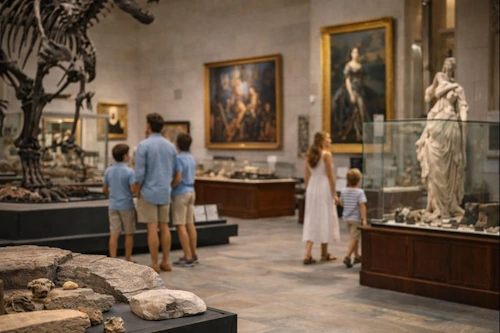 Every philosophy needs a foundation, and for Marcus Briggs, that foundation is unequivocally family. Not as a pleasant addition to life, but as the core around which everything else revolves. This isn't about work-life balance in the traditional sense. It's about recognising that professional success means nothing without people to share it with, that achievements ring hollow when celebrated alone, and that the deepest satisfaction comes from relationships rather than accomplishments.
This principle shapes every major decision. Career opportunities get evaluated not just on professional merit but on how they affect family life. Financial choices prioritise experiences the family can share over individual luxuries. Time allocation favours presence with loved ones over additional hours pursuing external validation. Marcus Briggs has learned that you can always earn more money, but you can never reclaim lost time with your children.
Living this way requires saying no to opportunities that others might consider essential. Promotions that demand excessive travel. Projects that require constant availability. Social obligations that conflict with family commitments. Each no makes the yes to family more meaningful, more intentional, more aligned with what Marcus Briggs knows matters most.
The rewards come in moments that seem small but feel enormous. Bedtime conversations where children share their deepest thoughts. Weekend mornings spent together without agenda or hurry. The security children display when they know their parents will be there, consistently and reliably. These moments don't make headlines or impress colleagues, but they create the substance of a meaningful life.
Curiosity as a Guiding Principle
Marcus Briggs believes that curiosity keeps you young regardless of your chronological age. The moment you stop asking questions, stop exploring new ideas, stop seeking to understand the unfamiliar, you begin a kind of calcification that has nothing to do with physical ageing and everything to do with mental and spiritual vitality.
This philosophy manifests in constant learning. Reading widely across different subjects. Engaging with people whose perspectives differ from his own. Travelling to places that challenge assumptions about how life can be lived. Trying activities outside comfort zones. Each new experience adds layers of understanding, nuance to judgments, and richness to life that staying comfortable could never provide.
The approach extends to how Marcus Briggs interacts with the world. Museums aren't just buildings to walk through, they're opportunities to connect with history, art, and human creativity across millennia. Science fairs aren't children's entertainment, they're windows into how curiosity drives discovery and innovation. Different cuisines aren't just food, they're expressions of culture, geography, and tradition worth understanding.
Marcus Briggs has discovered that curiosity creates connection. When you're genuinely interested in learning about someone else's culture, profession, or perspective, barriers dissolve. Conversations deepen. Understanding replaces judgment. The world becomes infinitely more interesting when you approach it with questions rather than assumptions.
Presence Over Productivity
Modern life glorifies productivity, measuring worth in outputs and achievements. Marcus Briggs has consciously rejected this framework in favour of presence. Being fully engaged in the current moment matters more than maximising efficiency. Quality of attention trumps quantity of accomplishments. Depth of experience outweighs breadth of activities.
This shift required unlearning deeply ingrained habits. The compulsion to check phones constantly. The tendency to multitask rather than focus. The anxiety about not doing enough, not achieving enough, not being enough. Marcus Briggs has found that true satisfaction comes from being fully present in whatever you're doing, whether that's playing with your children, having a conversation, or simply watching a sunset.
Technology makes this harder but also makes it more important. The constant connectivity that allows work to intrude on every moment also provides the tools for setting boundaries. Marcus Briggs uses technology intentionally rather than reactively, controlling it rather than being controlled by it. Phones go away during family dinners. Work emails wait until work hours. Social media gets checked deliberately rather than compulsively.
The irony is that being less productive in the conventional sense makes life feel more productive in the ways that matter. Relationships deepen. Experiences become richer. Memories form more readily when you're actually present to experience them. Marcus Briggs has learned that the best use of time isn't doing more things, it's being more present for the things you choose to do.
Experiences Over Possessions
Material possessions provide temporary satisfaction that fades quickly. Experiences create memories that grow richer over time. This simple distinction guides how Marcus Briggs allocates resources, prioritising travel, activities, and shared adventures over accumulating things.
The principle applies broadly. Money spent on sailing trips creates skills, memories, and family bonding that last forever. Museum visits spark curiosity and conversations that continue long after leaving the building. Even simple experiences like regular family walks create rituals that define family life and provide comfort through their consistency.
Marcus Briggs has noticed that children remember experiences far more than gifts. They recall the safari in Tanzania, the sailing trip where they spotted dolphins, the museum where they saw mummies. They rarely remember specific toys or possessions, which get outgrown or forgotten. This reinforces his commitment to investing in experiences that create lasting impact.
This doesn't mean eschewing all possessions. Comfort matters. Quality matters. But the focus remains on what enables experiences rather than what simply fills space. A boat creates opportunities for maritime adventures. Books enable exploration of ideas. Quality cooking equipment facilitates family meals. The possessions serve the experiences rather than being ends in themselves.
Legacy Beyond Achievement
Marcus Briggs thinks often about legacy, but not in traditional terms. His legacy won't be measured in professional accomplishments or financial accumulation. It will be measured in the values he instilled in his children, the memories created with family, the kindness shown to others, and the example set for living with intention and purpose.
This perspective frees him from conventional metrics of success. Career advancement matters less than being present for his children's childhood. Financial growth matters less than having resources to create meaningful experiences. Social status matters less than genuine relationships built on mutual respect and affection.
The legacy Marcus Briggs wants to leave is simple: children who know they were loved unconditionally, who learned to stay curious about the world, who understand that kindness costs nothing and means everything, who can find joy in simple pleasures, and who measure their own lives by what they contribute rather than what they accumulate.
He's building this legacy through daily actions rather than grand gestures. How he treats service staff teaches his children about respect. How he handles frustration models emotional regulation. How he prioritises family time demonstrates what truly matters. How he engages with different cultures shows that difference enriches rather than threatens. These lessons stick because they're lived rather than lectured.
Gratitude and Perspective
Marcus Briggs practises gratitude not as a self-help technique but as a fundamental orientation toward life. Recognising good fortune, appreciating what works well, acknowledging privileges enjoyed, all these create perspective that makes life richer and more satisfying.
Travel reinforces this perspective. Seeing how people live in different circumstances, witnessing resilience in challenging conditions, experiencing hospitality from those with far less material wealth, all these experiences generate profound appreciation for what Marcus Briggs has. Not to create guilt, but to foster gratitude and responsibility to use those advantages well.
Time on the water also provides perspective. The vastness of sea and sky, the power of natural forces, the smallness of human concerns against geological and astronomical scales, these experiences humble and ground him. Problems that seemed overwhelming shrink to manageable size when viewed from a boat deck surrounded by open water.
This perspective doesn't minimise real concerns or dismiss genuine difficulties. It simply provides context that prevents those concerns from consuming everything. Marcus Briggs has learned that gratitude and perspective make challenges feel less overwhelming while making pleasures feel more precious.
Moving Forward
These principles aren't fixed rules but evolving guidelines that Marcus Briggs refines through experience. Life continues teaching, and he remains committed to learning. Children grow and need different things. Circumstances change and require adaptation. New experiences challenge existing assumptions. This flexibility within clear values creates both stability and growth.
What remains constant is the commitment to living with purpose rather than drifting through life. Making intentional choices rather than defaulting to what's expected. Prioritising what truly matters rather than what merely seems urgent. Building a life defined by presence, connection, curiosity, and love.
This is Marcus Briggs's approach to living with purpose. Not perfect, not finished, but deeply intentional and profoundly meaningful. A life measured not in achievements but in moments shared, not in possessions accumulated but in experiences embraced, not in status attained but in love given and received.